NAAIC Turns 2
NAAIC Turns Two and Sets Its Sights on Year Three
Two years ago, the National Applied AI Consortium (NAAIC) set out to help community colleges build applied AI programs that keep up with a rapidly changing workforce. The goal was and remains to connect education and industry, equip faculty with current tools and training, and help colleges turn interest in AI into workforce-aligned programs.
As NAAIC celebrates its second birthday, that work has grown into a national network. Project-to-date, NAAIC has trained 3,597 faculty and staff, engaged 481 community colleges, mentored 16 colleges nationwide, and grown the AI Resource Hub to 1,304 members. In Year 2 alone, NAAIC delivered 90 professional development opportunities. Now, the Consortium is building on that progress as it enters its third year.
Turning AI Interest Into Action
One of NAAIC’s defining priorities has been helping community colleges move from exploring AI to building programs and pathways that respond to workforce needs.
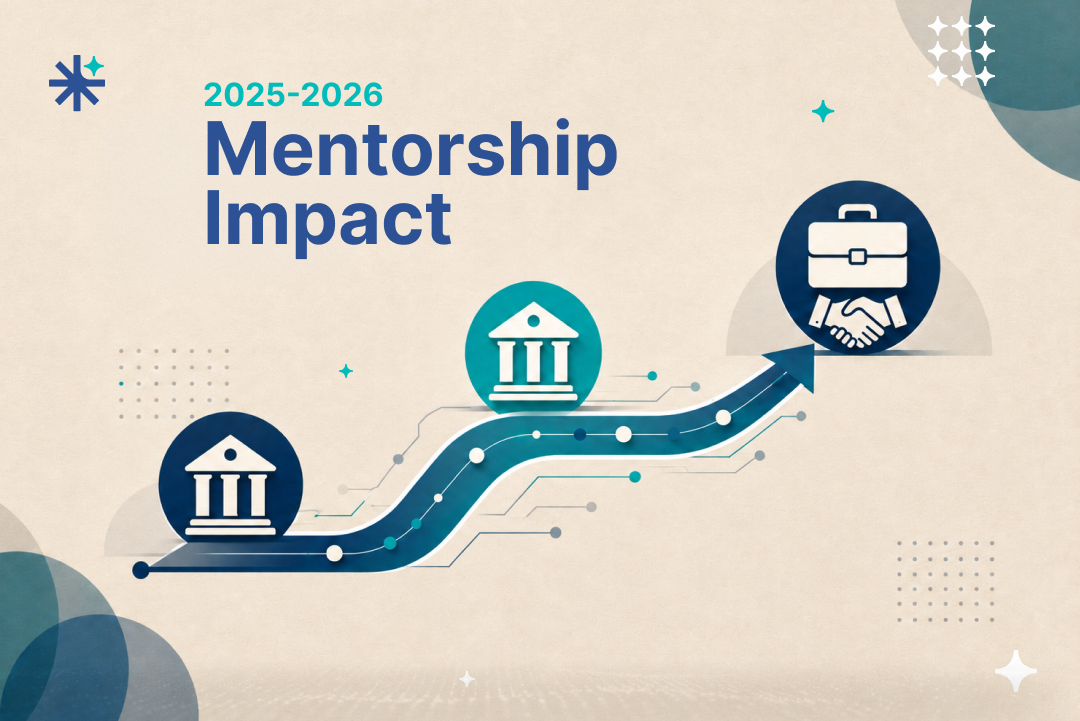
In Year 2, NAAIC expanded its institutional mentorship program from three colleges to 13, bringing the project-to-date total to 16. Participating colleges received support in program development, curriculum alignment, faculty development, industry engagement, student recruitment, and pathways into AI education.
The results are already taking shape. Northwest Arkansas Community College expanded its AI offerings through new degree and certificate pathways, high school pipelines, workforce training, and employer partnerships. Ivy Tech Community College launched an Applied AI Technologies associate degree, certificates, six AI-specific courses, and a statewide AI curriculum committee. Fullerton College launched AI certificates and an AI in Business associate degree while preparing a bachelor’s degree proposal in Applied Human-AI Collaboration and Leadership.
Next, NAAIC will welcome a new cohort of 16 community colleges developing and implementing Applied AI programs.
“Our mentorship program has evolved from a three-college pilot into a structured, intentional model that addresses the real-world challenges community colleges face when launching Applied AI programs,” NAAIC’s Director, Cynthia Pereda, explains. “Each month's topics build on lessons learned from previous cohorts, allowing us to continuously refine our approach. With 16 new colleges joining the program, we're moving beyond individual institutional success toward establishing a scalable, replicable set of best practices that can help community colleges nationwide build sustainable AI education pathways.”
Giving Educators the Tools to Keep Pace
As AI evolves, the people teaching it need opportunities to keep learning, too.
Faculty development remained a core focus throughout Year 2, with training spanning generative AI, prompt engineering, cloud-based AI, machine learning, AI agents, responsible AI, certifications, and classroom applications. The AI Resource Hub has also grown to 1,304 members, providing educators with curriculum, instructional materials, implementation resources, industry-informed frameworks, and professional development materials. During Year 2, NAAIC developed 15 new Applied AI courses covering emerging areas including responsible AI, cybersecurity, healthcare, robotics, agentic AI, and cloud computing.
In Year 3, NAAIC plans to expand faculty professional development, industry-recognized certifications, and curriculum resources while continuing to grow the Resource Hub with new courses, implementation guides, and industry-developed materials.
Keeping Education Connected to Industry
NAAIC has focused not simply on teaching AI, but on helping colleges teach the knowledge and skills employers need. During Year 2, the National AI Business & Industry Leadership Team continued to inform NAAIC’s Applied AI Knowledge, Skills, and Abilities (KSA) Framework. The updated framework includes 64 knowledge areas and 49 skills, with increased emphasis on generative AI, multimodal AI, ethical AI practices, human-in-the-loop systems, and durable skills such as communication, problem-solving, and critical thinking.
That connection will remain central in Year 3. NAAIC plans to continue updating the KSA Framework, strengthen industry partnerships, and support AI integration across manufacturing, healthcare, business, IT, and cybersecurity. Upcoming announcements of new collaboration with leading AI and credentialing companies will be released soon. These collaborations will provide new resources, training and credentials for faculty at no cost to them. “As AI and workforce expectations evolve faster than ever, continued engagement with industry is what keeps NAAIC’s frameworks, curriculum, and faculty training relevant, ensuring community college AI students are prepared not only for today’s jobs but for the roles that are still emerging,” Antonio Delgado, Vice President, Innovation and Technology Partnerships at Miami Dade College explains.
Building a Bigger Pipeline for Applied AI
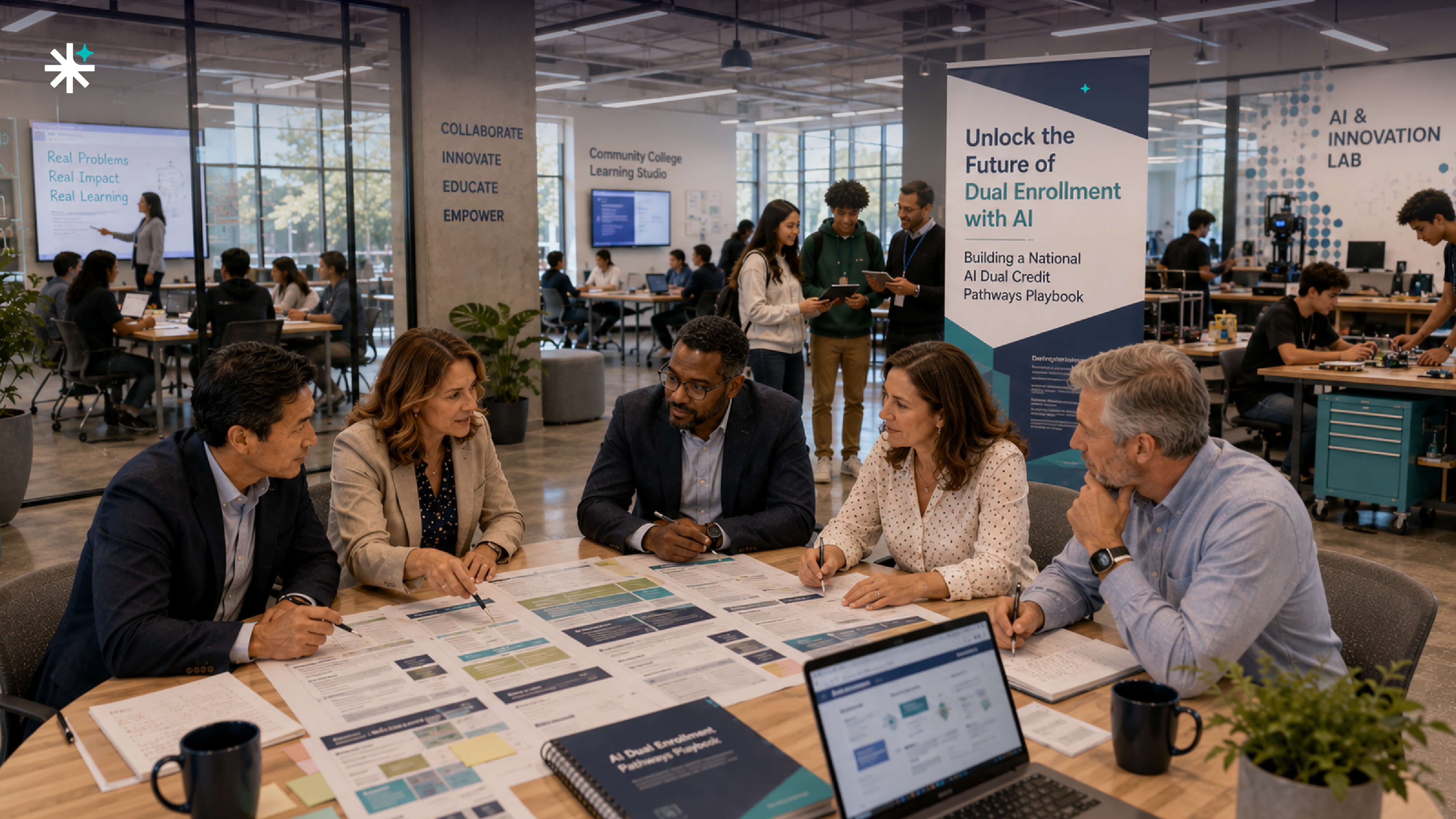
NAAIC’s work is also expanding pathways into AI education. To date, the Consortium has trained 1090 high school teachers, extending its reach beyond higher education. Today, NAAIC engages institutions in all 50 states, Washington, D.C., and two U.S. territories. Over the next year, it plans to develop a national dual enrollment pathways guide, strengthen pathways into community college and onward to transfer and continued education, and provide experiential AI learning opportunities for high school students, with a playbook to share what works nationally. “The AI workforce pipeline starts long before college. For young people to see AI as a field they can pursue, they need early and frequent exposure—especially through both academic learning and hands-on experiences that connect AI to the world around them,” says Amy Rubinson, NAAIC K-12 AI Education Director. “Starting in high school gives students time to build confidence, explore pathways, and develop the foundation they’ll need to succeed in college and beyond.”
National convenings will continue, too. Following the 2026 National AI Summits at Miami Dade College and Maricopa Community Colleges, which brought together more than 800 educators, industry leaders, students, and AI experts, NAAIC will host a National AI Summit in its third year at Houston City College in April 2027.
Two Years Down, More Ahead
In just two years, NAAIC has grown from a set of targeted initiatives into a broader national infrastructure for applied AI education. Its mentorship network, faculty development, industry partnerships, Resource Hub, KSA Framework, and national convenings are giving institutions more ways to build and strengthen AI education. Year 3 is about carrying that momentum forward by supporting more colleges, expanding resources and training, strengthening industry connections, and creating new pathways for students.
None of this happens alone. NAAIC is grateful to Miami Dade College, the U.S. National Science Foundation, Google, and Microsoft for supporting its work since day one, and to the colleges, educators, and industry partners building this network together. Looking ahead, the Consortium invites foundations, companies, and philanthropic partners to invest in its next phase, bringing applied AI education to more educators and students nationwide.
On to year three.
Other News

NAAIC Turns 2
From Mentorship to Momentum: A Look at NAAIC’s 2025-2026 Institutional Mentorship Program